
Personal Information
| Name:Babatunde Olugbenga AWOSANMI | |
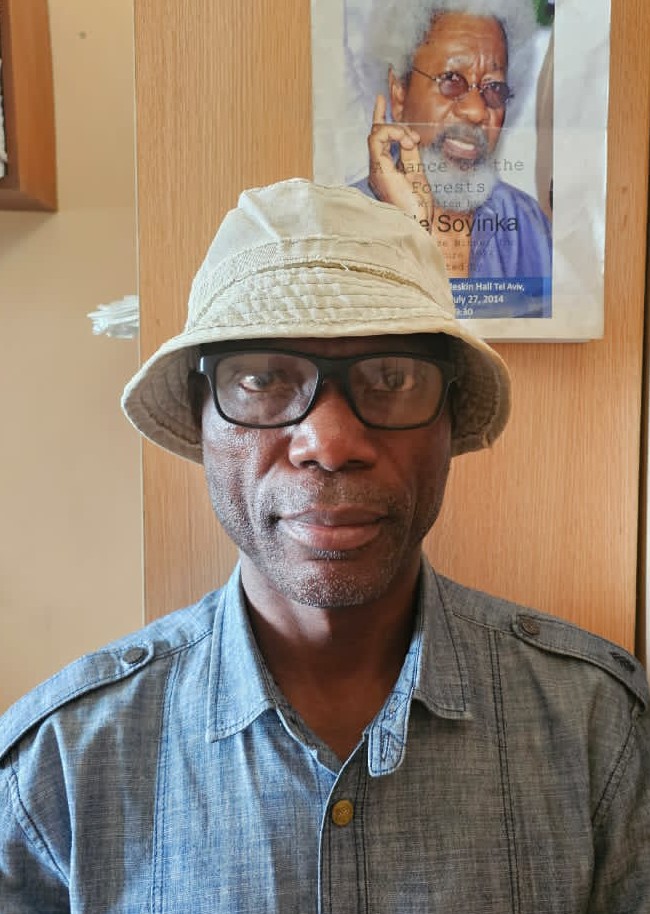 | Designation: Snr. Lecturer |
| Academic Qualification: B.A., M.A., Ph.D. | |
| Faculty: Arts | |
| Department: Theatre Arts | |
| Phone number: +234 803 726 0140 | |
Google Scholar Profile Research Gate Profile ORCID Profile | |
Email: bo.awosanmi@ui.edu.ng Email Address 2: atundah@gmail.com | |
| Area of Specialisation: Dramatic/Theatre Theory and Criticism; Theatre Directing; Playwriting; Guerrilla Theatre; Art, Philosophy and Aesthetics. | |
| Research Interests: Dramatic/Theatre/Literary Theory and Criticism; Theatre Directing; Creative Writing; Comparative Art, Philosophy and Aesthetics; Future Studies; Soyinkaesque Studies; Cultural Studies; Terror Studies; Applied/Guerrilla Theatre; Post/Afro-colonial Studies; Performance Studies. |
Curriculum Vitae
POSITION: READER
I. (a) Name: Babatunde Olugbenga Awosanmi
(b) Date of Birth: 25 October, 1965
(c) Department: Theatre Arts
(d) Faculty: Arts
II. (a) First Academic Appointment: 1 September, 2004
(b) Present Post: Senior Lecturer (October, 2011)
(c) Date of last Promotion: 1 October, 201
(d) Date Last Considered (in cases where promotion was not through): Not applicable
III. University Education (with dates):
(a) Obafemi Awolowo University, Ile-Ife (1987 – 1991)
(b) University of Ibadan (1993 – 1995)
(b) University of Ibadan (1996 – 2003)
IV. Academic Qualifications (with Dates and Granting Bodies):
- B.A. (Hons.) Dramatic Arts. Obafemi Awolowo University, Ile-Ife; 1991
- M.A. Theatre Arts. University of Ibadan; 1995
- Ph.D. Theatre Arts. University of Ibadan; 2003
V. Professional Qualifications and Diplomas (with Dates):
Nil.
VI. Scholarships, Fellowships and Prizes (with dates) in Respect of Undergraduate and Postgraduate Work only:
VII. Honours, Distinctions and Membership of Learned Societies:
(i) Finalist: International Playwriting Competition, England (1991)
(ii) University of Ibadan Senate Research Grant (2006)
(iii) Prince Claus Fund for Culture and Development Travel Grant (2007)
(iv) Cambridge/Africa Collaborative Research Fellowship, University of Cambridge, United Kingdom (2010 – 2011)
(v) Fellow, Wolfson College, University of Cambridge, United Kingdom (2010 – Date)
(vi) Collaborative Researcher, Centre of African Studies, University of Cambridge, United Kingdom (2012 – Date)
(vii) Member, African Theatre Association (AfTA)
(viii) Member, The Internationalists (Forum of Theatre Directors)
(ix) Member, African Studies Association, United Kingdom (ASAUK)
(x) Member, Association of Nigerian Authors (ANA)
(xi) Member, National Association of Nigerian Theatre Arts Practitioners (NANTAP)
(xii) Member, Society of Nigerian Theatre Artists (SONTA)
VIII. DETAILS OF TEACHING/WORK EXPERIENCE:
(a)
(i)Teaching Assistant, Department of Theatre Arts, University of Ibadan, 1995 – 2003
(ii) Lecturer II, Department of Theatre Arts, University of Ibadan, 2004 -2007
(iii) Lecturer I, Department of Theatre Arts, University of Ibadan, 2004 - 2011
(iv) Senior Lecturer, Department of Theatre arts, University of Ibadan, 2011 - Present
(v) Visiting Lecturer, Kwara State University, Malete, Kwara State: November, 2018 – October, 2019
(vi) Visiting Lecturer, University of the Gambia: March – April, 2019
(b) Courses Taught at the Undergraduate and Postgraduate Levels:
THA 306: Research Methods and Documentation (3 Units)
THA 310: Directing and Stage Management: Basic Principles (3 Units)
THA 320: Directing and Stage Management: Basic Practice (3 Units)
THA 330: Production Workshop (3 Units)
THA 331: Theatre Arts Practicum/Internship (3 Units)
THA 332: Popular Theatre/ Community Theatre/Theatre-for-Development (3 Units)
THA 405: Drama and Theatre: Theoretical Approaches
THA 406: Workshop Ensemble (3 Units)
THA 407: Independent Participation (3 Units)
THA 410: Directing and Stage Management: Intensive Study (3 Units)
THA 420: Directing and Stage Management: Intensive Practice (3 Units)
THA 421: Playwriting (3 Units)
THA 422: Playwriting (3 Units)
THA 450: Final Year Project in Theatre Arts/Long Essay (6 Units)
THA 701: Background to Theatrical Arts (3 Units)
THA 731: Experimental Theatre (3 Units)
THA 758: Bibliography and Research Methods (3 Units)
THA 759: Projects in Theatre Arts (6 Units)
THA 761: Topics in Theatre History (3 Units)
THA 762: Topics in Dramatic Literature (3 Units)
THA 763: Theatre Arts Theory and Criticism (3 Units)
THA 765: Advanced Studies in Arts and Culture (3 Units)
THA 774: Philosophy and Aesthetics in the Theatre (3 Units)
THA 779: Research Methods and Bibliography (3 Units)
THA 780: Dissertation/Project in Theatre Arts (6 Units)
THA 782: Theatre for Development: Theory and Praxis (3 Units)
THA 783: Advanced Studies in Directing: Principles and practice (3 Units)
THA 801: Advanced Studies in Bibliography and Methods of Research (3 Units)
(c) Supervision:
B.A. Long Essays: 95 completed; 5 ongoing
M.A. projects: 50 completed.
Ph.D. Theses: 4 completed; 4 Ongoing
(d) Selected Administrative Responsibilities:
(i) Artistic Director of 80% of Departmental Stage Productions (2024 – date)
(ii) Member, Departmental Productions & Equipment Committee (2011 - 2013)
(iii) Coordinator, Faculty of Arts Postcolonial/Future Studies Group (2005 – 2007)
(iv) Member, Faculty of Arts Committee on the University 60th Anniversary
(v) Member, Board of Arts Studies (2012/2014)
(vi) Member, University Committee on Professor Wole Soyinka’s 80th Birthday Anniversary (2014)
(vii) Member, Planning Committee, Third Biennial International Conference on Arts and Humanities (2016)
(viii) Assistant Warden, Tafawa Balewa Postgraduate Hall (2011 – 2015)
(ix) Sub-Dean (Postgraduate), Faculty of Arts (2014)
(x) Member, Board of Postgraduate Studies (2014 – 2016)
(xi) Acting Head, Department of Theatre Arts (August 01, 2014 – July 31, 2016)
(xii) Member of Senate, University of Ibadan (2014 – 2016)
(xiii) Member, Faculty of Arts Appointment and Promotion Committee for Staff on HATTIS 5 and below (2017 – 2018)
(xiv) Member, Faculty Board of Arts Studies (2023 - 2024)
(e) Community Service:
(i) Chief Warden, Wole Soyinka Foundation Residency, ARI, Abeokuta (2016 – date)
(i) Consultant, Art and Performance; and Judge, Wole Soyinka International Cultural Exchange (2010 – date)
(iii) Consultant and Chief Judge, Derek J. Bullock Theatre Competition Organised by the Derek J. Bullock Foundation, Ibadan
(iv) Ph.D. Thesis’ Internal-external Examiner, the Department of English, University of Ibadan.
(v) Ph.D Thesis’ Internal-external Examiner, Institute of African Studies, University of Ibadan.
(vi) Ph.D Thesis’ Internal-external Examiner, Department of Peace, Security and strategic Studies, University of Ibadan
(vii) External Examiner, Department of English Studies, Obafemi Awolowo University, Ile-Ife
(viii) External Examiner, Department of Dramatic Arts, Obafemi Awolowo University, Ile-Ife
(ix) Ph.D Thesis’ External Examiner, Drama Department Stellenbosch University, South Africa
IX RESEARCH
(a) Completed:
(i) Tour-preneureship and Wealth of Culture: Economics of Cultural Communities and Creative Industries (a Proposal for Nigeria): Culture’s preeminent stature as the original wealth of a people is sanctioned in the United Nations’ MDGs and SDGs. African nations, especially Nigeria, have failed to achieve sustainable culture-to-wealth transformation owing to moribund uni-directional tourism or mono-tourism operational policies. Evoking the cultural economic, cultural communities/creative kibutz and cultural tour-preneurship concepts, the study proposes an African continental cultural nationalistic ideology with a transformational approach to creative communities and creative industries, and an inside-out international tourism flow that aggressively promotes Nigeria’s cultural capital in the global tourism market.
(ii) The Creative Courage: Evolving an Aesthetic and Pedagogy of Theatre Directing: The essay is my input in a book titled: Nigerian Stage Directors’ Philosophies, Aesthetics and Ideologies - contributed by thirty selected Nigerian theatre directors. Responding to the book’s objective - to fill the yawning gap in Nigerian theatre directing pedagogy which has, hitherto, prioritised “the theories and philosophies of white directors” - the essay is a scholar-artist’s contribution to the articulation of African indigenous theatre directing epistemology. The essay is indigenously pivoted on a dual private creative impetus: the dramaturgical Sangoic appetite and the Obatalan tranquil impulse. The chapter redefines theatre directing as “an approach to the material’s interpretation” and not ‘interpretation in itself’; outlines an intentional directorial pedagogy; and conceptualises the Ajala-Obatala-Sango-Olodumare creative quartet as an intra-artistic co-inspirational formula of invested partnership typical of theatre productions. Aja is projected as my muse of psychical probing of the writer’s sub-core, spirit of inquisitive creativity and quest for new ideas and knowledge in directing. Theatre directing, the essay posits, is the utilitarian “art of creating the uncharted conscience of humanity”.
(b) In Progress:
(i) Rites of Mediation: Medea/Medaaye in a Season of Plague: The study explores the history of pandemics or plague as a universal existential phenomenon and situates my 2021/2022 production of Femi Osofisan’s Medaaye, an adaptation of Medea by the Greek classical tragic writer, Euripides, within this context as a theatrical rite of mediation in the COVID-19 epidemic. An investigation of the art of directing is undertaken from both theoretical and practical dimensions as a mediatory art which enables the director’s creative intervention in the communal landscape of the theatrical production and in the existential landscape of the audience during COVID-19. The creative humanistic retrospective study applies the practice-as-research/research-as-practice method. It commenced early 2024 and is expected to be completed in 2025.
(c) Dissertation and Thesis:
(i) Awosanmi, Babatunde Olugbenga: “Mythology and Tragedy: Aesthetic Dimensions in Select Works of William Butler Yeats and Wole Soyinka” (Ph.D. Thesis, 2003).
(ii) Awosanmi, Babatunde Olugbenga: “Provocation and the Artistic Vision: Soyinka’s Political Satire and the Dictatorial Complex (M.A. Dissertation Project, 1995).
X. PUBLICATIONS
(a) Books Already Published
*2. Awosanmi, T., Adeduntan, A., and Ajayi, A. (Eds). (2018). Postcolonialism and Beyond: Cultural Production and Social Sustenance: Proceedings of the Colloquium in Honour of Dele Layiwola. Ibadan: Society for Postcolonial Culture Production. xi & 395 pp. ISBN: 978-978-57821-2-7 (Nigeria). (Contribution: 40%).
(b) Chapters in Books Already Published:
4. Awosanmi, T. (2007). Myths, Mimesis and the Pantheon in Nigerian Literary Drama. In Adeoti, G.R. (Ed.) Muse and Mimesis: Critical Perspectives on Ahmed Yerima’s Drama. Ibadan: Spectrum Books Ltd. 278 – 301 pp. ISBN: 10: 978-029-761-8 / 13: 978-978-029-761-9. (Nigeria).
5. Awosanmi, T. (2008). Orisaism, Guest-Faiths and Global African Spiritual Order: Wole Soyinka’s Preceptive Creed. In Tunde Babawale and Akin Alao (Eds.) Global African Spirituality, Social Capital and Self-Reliance in Africa. Lagos: Center for Black African Arts and Culture – CBAAC. 197–214. ISBN: 978-978-023-253-2. (Nigeria).
*6. Awosanmi, T. (2013). Re-Imagining Fagunwa’s Forest of a Thousand Daemons for the Modern Audience. Olasope, O. (Ed.) Black Dionysos: Conversations with Femi Osofisan. Ibadan: Kraft Books Limited. 51– 82 pp. ISBN 978-978-918-109-4. (Nigeria).
*7. Jeyifo, B. and Awosanmi, T. (2013). Nigerian Theatre, Culture, Collaboration and Practice. Olasope, O. (Ed.) Black Dionysos: Conversations with Femi Osofisan. Ibadan: Kraft Books Limited. 83 – 136 pp. ISBN 978-978-918-109-4. (Nigeria). (Contribution: 50%).
*8. Awosanmi, T. (2023). Afro-Globophobia and Cultural Iconography. In Amao, O., Ogunlewe, A., Dosumu, A., and Oamen, O. (Eds.) Cultural Diversity, Integration and Nation Building in Africa after FESTAC. Lagos: Centre for Black African Arts and Culture.100 – 115 pp. ISBN 978-978-983-745-0. (Nigeria).
(c) Articles that have Already Appeared in Refereed Conference Proceedings: Nil
(d) Articles that have Already Appeared in Learned Journals:
9. Awosanmi, T. (2007). Wole Soyinka’s Postmodernism: the Poetics of Igbale. Ibadan Journal of Theatre Arts (IJOTA) No 1: 31- 51. (Nigeria).
10. Awosanmi, T. (2007). African Dramatic Imagination, Mythic Currents and Social Order. The Performer: Ilorin Journal of the Performing Arts Vol. 9: 12 - 32. (Nigeria).
11. Awosanmi, T. (2009). Africa, Genderization and Wole Soyinka’s Construction of Matricentric Power. Reconfigurations: A Journal for Poetics and Poetry/Literature and Culture Vol. 3 (Immanence/Imminence): 87 – 124. (USA).
12. Awosanmi, T. (2009). Wole Soyinka’s Glocal Cultural Legislation. Ibadan Journal of Humanistic Studies Nos. 19 & 20: 101 – 137. (Nigeria).
13. Awosanmi, T. (2011). Cosmopolitan Ogunnianism: Wole Soyinka’s Post-Nobel Interventionist Polemics. IMBIZO: International Journal of African Literary and Comparative Studies Vol. 2 (2): 83 – 99. (South Africa).
*14. Awosanmi, T. (2012). Cine-Utopianism: Tunde Kelani’s Historiophoty and Polityphoty. Journal of Black and African Arts and Civilization (JBAAC) Vol 6, No 1: 190 – 219. (Nigeria).
15. Awosanmi, T. (2013). Soyinka-Meaning: Pyratism and Activism. ISALA: Ife Studies in African Literature and the Arts No. 8: 79 – 101. (Nigeria).
*16. Awosanmi, T. (2014). Masked Iconoclasm: The Guerrilla Socio-Performative Traditions of Gelede-Efe and Pyrate-Efe. IJOTA: Ibadan Journal of Theatre Arts Nos 9 & 10: 258-295. (Nigeria).
*17. Awosanmi, T. (2021). Kemi Atanda Ilori. The Theatre of Ola Rotimi: Power, Politics and Postcolonialism. Journal of Contemporary Drama in English (JCDE) Vol. 9. Issue 1: 162 – 166. (Germany).
*18. Awosanmi, T. (2021). Sandra Umathum and Benjamin Wihstutz. Disabled Theatre. Platform: Journal of Theatre and Performing Arts. Vol. 15. No.1: 176 – 180. (United Kingdom).
*19. Awosanmi, T. (2024). Existence is One Arena: Spatial (Phe)Noumenality and Wole Soyinka’s Mythopoesis. African Theatre and Media Review (ATMR). Vol. 1: 1–20. (Nigeria).
(e) Books, Chapters in Books and Articles Already Accepted for Publication:
XI. Major Conferences and Workshops Attended in the Last 5 Years (with Paper Read).
i. The 4th Annual Lagos Studies Association Conference, University of Lagos (June 25 – 29, 2019).
Paper Presented: “Post-Fagunwaism: Poetics of Cultural Nationalism, Re-Textualization and Performativity”.
ii. The Fagunwa Study Group’s International Conference on “Wọlé Ṣóyínká: Wọlé Ṣóyínká, D. O. Fágúnwà, and the Yorùbá Artistic Heritage”, International Culture and Events’ Centre (The Dome), Akure, Ondo State (7th – 10th August, 2019).
Paper Presented: “Reading and Writing Wole Soyinka: Editing Power and Freedom”.
iii. Conference on “Performing Ancient Greek Literature in a Time of Pandemic”, University of Reading, United Kingdom (22nd – 24th June, 2022).
Paper Presented: “Rites of Mediation: Medea/Medaaye in a Season of Plague”.
iv. The Black Film Centre and Archive, Indiana University, Bloomington, and the Wole Soyinka International Cultural Exchange Screenings and Virtual Symposium on “Soyinka, Citizenship and the Moving Image”, Phyllis Klotman Room, Indiana University, Bloomington, and Freedom Park, Lagos, Nigeria (July 12 – July 14, 2022).
Paper Presented: “Transitions: Soyinka, African Cultures and the Cinematic Art”.
v. Centre for Black African Art and Culture Organised FESTAC @ 45 Colloquium, Abuja, Nigeria (9th December, 2022).
Paper Presented: “Afroglobophobia and Cultural Iconography”.
vi. Bournemouth University, United Kingdom, in Collaboration with Kwame Nkrumah University of Science and Technology, Ghana; and Wole Soyinka Cultural Exchange. Conference on “Media Decolonisation Imaginary: Advancing New Methodologies for Decolonising Media Research, Pedagogy and Practice’. Virtual (30th – 31st January, 2024).
Paper Presented: “Decolonial Continuities – Fourth Stage into Third Space: WS’ to WSICE’s Imaginaries and Decolonial Missions”.
XII. Ten Best Publications that Reflect the Totality of my Contributions to Scholarship
1. Awosanmi, T. (2006). Wole Soyinka’s Psychic Mask: Refortification and Transition into Self-Destination. In Roy, A. G. (Ed.) Wole Soyinka: An Anthology of Recent Criticism. New Delhi: Pencraft International. 54-70 pp. ISBN: 81-85753-77-6. (India).
2. Awosanmi, T. (2007). Myths, Mimesis and the Pantheon in Nigerian Literary Drama. In Adeoti, G.R. (Ed.) Muse and Mimesis: Critical Perspectives on Ahmed Yerima’s Drama. Ibadan: Spectrum Books Ltd. 278 – 301 pp. ISBN: 10: 978-029-761-8/13: 978-978-029-761-9. (Nigeria).
3. Awosanmi, T. (2007). African Dramatic Imagination, Mythic Currents and Social Order. The Performer: Ilorin Journal of the Performing Arts Vol. 9: 12 - 32. (Nigeria).
4. Awosanmi, T. (2009). Africa, Genderization and Wole Soyinka’s Construction of Matricentric Power. Reconfigurations: A Journal for Poetics and Poetry/Literature and Culture Vol. 3 (Immanence/Imminence): 87 – 124. (USA).
5. Awosanmi, T. (2011). Cosmopolitan Ogunnianism: Wole Soyinka’s Post-Nobel Interventionist Polemics. IMBIZO: International Journal of African Literary and Comparative Studies Vol. 2 (2): 83 – 99. (South Africa).
6. Awosanmi, T. (2012). Cine-Utopianism: Tunde Kelani’s Historiophoty and Polityphoty. Journal of Black and African Arts and Civilization (JBAAC) Vol 6, No 1: 190 – 219. (Nigeria).
7. Awosanmi, T. (2013). Re-Imagining Fagunwa’s Forest of a Thousand Daemons for the Modern Audience. Olasope, O. (Ed.) Black Dionysos: Conversations with Femi Osofisan. Ibadan: Kraft Books Limited. 51– 82 pp. ISBN 978-978-918-109-4. (Nigeria).
8. Awosanmi, T. (2014). Masked Iconoclasm: The Guerrilla Socio-Performative Traditions of Gelede-Efe and Pyrate-Efe. IJOTA: Ibadan Journal of Theatre Arts Nos 9 & 10: 258-295. (Nigeria).
9. Awosanmi, T. (2024). Existence is One Arena: Spatial (Phe)Noumenality and Wole Soyinka’s Mythopoesis. African Theatre and Media Review (ATMR). Vol. 1: 1 – 20. (Nigeria).
10. Awosanmi, T. (2024). Spatial Animation: An Ethos of Theatre Direction. Ibadan Journal of Theatre Arts (IJOTA) No. 16: 20 pp. (Nigeria).
Dr B.O. Awosanmi’s Research Focus
The scope of my research interest traverses dramatic/literary theory and criticism; theatre aesthetics and philosophy, comparative theatre/drama; African cultural studies; post-colonial/mythological/performance studies; Soyinkaesque studies and theatre directing and playwriting. These constitute areas in which I have developed expertise over the years through theoretical and practical research. My dramatic theory and criticism research focus investigates the aesthetic and philosophical imaginaries in African drama through the works of selected African dramatists. Through performance-inclined studies, I have investigated the process and approach central to the theatrical re-imagination of the works of D.O. Fagunwa through stage adaptations as well as how the ethics of culture, collaboration and practice are determined in the Nigerian theatre. My interest in guerrilla theatre performance is theorised through a comparative study of the Yoruba indigenous gelede-efe and the contemporary Nigerian pyrate-efe.
Explorations in Soyinkaesque research challenge the Marxian reductionism and subversion of the ritual revolutionary ethos of African myth-inclined dramas such as Soyinka’s through its narrow-tunnelled vision that privileges the material phenomenal axis of existence over the noumenal. This engagement, a continuous one, is being pursued through the conceptual evocation of the ethos of neo-primitivism, an Afro-traditionist approach to the western notion of postmodernism. The poetics of igbale is then reified as an alternative theoretical template. This interest equally foregrounds my approach to research in film studies as I have demonstrated in my examination of Tunde Kelani’s films.
The scholarship of theatre directing in Nigeria has so far survived on conservative colonial texts which only project outmoded cliché ideas. My on-going research foray in directing resides in generating a teaching material that is informed by ideas and theories generated within the African theatrical space for the purpose of teaching theatre directing to students in Nigerian theatre academies. Currently, through theatre directing and African culture research, I am in the process of evolving a unique form of performance aesthetic that privileges the interpretation of African ritual/myth-inclined dramas. This meta-theatrical form was first experimented in 2014 through my igbale production of Wole Soyinka’s less-performed epic drama, A Dance of the Forests. Applying my private constructs of ritual ecology, forest-rite, environmental forest-embedded aesthetics and installation theatricalism, this performance affirms my directorial signature, taste, style, aesthetic and philosophy of spatial animation. An experimental disruption of orthodox western proscenium staging and a project in the decolonization of African theatre directing, it signposts my ideo-creative continuity as well as the neo-primitive blueprint for the future of my meta-theatrical directorial aesthetics.
Publications
PUBLICATIONS
(a) Books Already Published
*2. Awosanmi, T., Adeduntan, A., and Ajayi, A. (Eds). (2018). Postcolonialism and Beyond: Cultural Production and Social Sustenance: Proceedings of the Colloquium in Honour of Dele Layiwola. Ibadan: Society for Postcolonial Culture Production. xi & 395 pp. ISBN: 978-978-57821-2-7 (Nigeria). (Contribution: 40%).
(b) Chapters in Books Already Published:
4. Awosanmi, T. (2007). Myths, Mimesis and the Pantheon in Nigerian Literary Drama. In Adeoti, G.R. (Ed.) Muse and Mimesis: Critical Perspectives on Ahmed Yerima’s Drama. Ibadan: Spectrum Books Ltd. 278 – 301 pp. ISBN: 10: 978-029-761-8 / 13: 978-978-029-761-9. (Nigeria).
5. Awosanmi, T. (2008). Orisaism, Guest-Faiths and Global African Spiritual Order: Wole Soyinka’s Preceptive Creed. In Tunde Babawale and Akin Alao (Eds.) Global African Spirituality, Social Capital and Self-Reliance in Africa. Lagos: Center for Black African Arts and Culture – CBAAC. 197–214. ISBN: 978-978-023-253-2. (Nigeria).
*6. Awosanmi, T. (2013). Re-Imagining Fagunwa’s Forest of a Thousand Daemons for the Modern Audience. Olasope, O. (Ed.) Black Dionysos: Conversations with Femi Osofisan. Ibadan: Kraft Books Limited. 51– 82 pp. ISBN 978-978-918-109-4. (Nigeria).
*7. Jeyifo, B. and Awosanmi, T. (2013). Nigerian Theatre, Culture, Collaboration and Practice. Olasope, O. (Ed.) Black Dionysos: Conversations with Femi Osofisan. Ibadan: Kraft Books Limited. 83 – 136 pp. ISBN 978-978-918-109-4. (Nigeria). (Contribution: 50%).
*8. Awosanmi, T. (2023). Afro-Globophobia and Cultural Iconography. In Amao, O., Ogunlewe, A., Dosumu, A., and Oamen, O. (Eds.) Cultural Diversity, Integration and Nation Building in Africa after FESTAC. Lagos: Centre for Black African Arts and Culture.100 – 115 pp. ISBN 978-978-983-745-0. (Nigeria).
(c) Articles that have Already Appeared in Refereed Conference Proceedings: Nil
(d) Articles that have Already Appeared in Learned Journals:
9. Awosanmi, T. (2007). Wole Soyinka’s Postmodernism: the Poetics of Igbale. Ibadan Journal of Theatre Arts (IJOTA) No 1: 31- 51. (Nigeria).
10. Awosanmi, T. (2007). African Dramatic Imagination, Mythic Currents and Social Order. The Performer: Ilorin Journal of the Performing Arts Vol. 9: 12 - 32. (Nigeria).
11. Awosanmi, T. (2009). Africa, Genderization and Wole Soyinka’s Construction of Matricentric Power. Reconfigurations: A Journal for Poetics and Poetry/Literature and Culture Vol. 3 (Immanence/Imminence): 87 – 124. (USA).
12. Awosanmi, T. (2009). Wole Soyinka’s Glocal Cultural Legislation. Ibadan Journal of Humanistic Studies Nos. 19 & 20: 101 – 137. (Nigeria).
13. Awosanmi, T. (2011). Cosmopolitan Ogunnianism: Wole Soyinka’s Post-Nobel Interventionist Polemics. IMBIZO: International Journal of African Literary and Comparative Studies Vol. 2 (2): 83 – 99. (South Africa).
*14. Awosanmi, T. (2012). Cine-Utopianism: Tunde Kelani’s Historiophoty and Polityphoty. Journal of Black and African Arts and Civilization (JBAAC) Vol 6, No 1: 190 – 219. (Nigeria).
15. Awosanmi, T. (2013). Soyinka-Meaning: Pyratism and Activism. ISALA: Ife Studies in African Literature and the Arts No. 8: 79 – 101. (Nigeria).
*16. Awosanmi, T. (2014). Masked Iconoclasm: The Guerrilla Socio-Performative Traditions of Gelede-Efe and Pyrate-Efe. IJOTA: Ibadan Journal of Theatre Arts Nos 9 & 10: 258-295. (Nigeria).
*17. Awosanmi, T. (2021). Kemi Atanda Ilori. The Theatre of Ola Rotimi: Power, Politics and Postcolonialism. Journal of Contemporary Drama in English (JCDE) Vol. 9. Issue 1: 162 – 166. (Germany).
*18. Awosanmi, T. (2021). Sandra Umathum and Benjamin Wihstutz. Disabled Theatre. Platform: Journal of Theatre and Performing Arts. Vol. 15. No.1: 176 – 180. (United Kingdom).
*19. Awosanmi, T. (2024). Existence is One Arena: Spatial (Phe)Noumenality and Wole Soyinka’s Mythopoesis. African Theatre and Media Review (ATMR). Vol. 1: 1–20. (Nigeria).
(e) Books, Chapters in Books and Articles Already Accepted for Publication:
Research
(a) Completed:
(i) Tour-preneureship and Wealth of Culture: Economics of Cultural Communities and Creative Industries (a Proposal for Nigeria): Culture’s preeminent stature as the original wealth of a people is sanctioned in the United Nations’ MDGs and SDGs. African nations, especially Nigeria, have failed to achieve sustainable culture-to-wealth transformation owing to moribund uni-directional tourism or mono-tourism operational policies. Evoking the cultural economic, cultural communities/creative kibutz and cultural tour-preneurship concepts, the study proposes an African continental cultural nationalistic ideology with a transformational approach to creative communities and creative industries, and an inside-out international tourism flow that aggressively promotes Nigeria’s cultural capital in the global tourism market.
(ii) The Creative Courage: Evolving an Aesthetic and Pedagogy of Theatre Directing: The essay is my input in a book titled: Nigerian Stage Directors’ Philosophies, Aesthetics and Ideologies - contributed by thirty selected Nigerian theatre directors. Responding to the book’s objective - to fill the yawning gap in Nigerian theatre directing pedagogy which has, hitherto, prioritised “the theories and philosophies of white directors” - the essay is a scholar-artist’s contribution to the articulation of African indigenous theatre directing epistemology. The essay is indigenously pivoted on a dual private creative impetus: the dramaturgical Sangoic appetite and the Obatalan tranquil impulse. The chapter redefines theatre directing as “an approach to the material’s interpretation” and not ‘interpretation in itself’; outlines an intentional directorial pedagogy; and conceptualises the Ajala-Obatala-Sango-Olodumare creative quartet as an intra-artistic co-inspirational formula of invested partnership typical of theatre productions. Aja is projected as my muse of psychical probing of the writer’s sub-core, spirit of inquisitive creativity and quest for new ideas and knowledge in directing. Theatre directing, the essay posits, is the utilitarian “art of creating the uncharted conscience of humanity”.
(b) In Progress:
(i) Rites of Mediation: Medea/Medaaye in a Season of Plague: The study explores the history of pandemics or plague as a universal existential phenomenon and situates my 2021/2022 production of Femi Osofisan’s Medaaye, an adaptation of Medea by the Greek classical tragic writer, Euripides, within this context as a theatrical rite of mediation in the COVID-19 epidemic. An investigation of the art of directing is undertaken from both theoretical and practical dimensions as a mediatory art which enables the director’s creative intervention in the communal landscape of the theatrical production and in the existential landscape of the audience during COVID-19. The creative humanistic retrospective study applies the practice-as-research/research-as-practice method. It commenced early 2024 and is expected to be completed in 2025.
(c) Dissertation and Thesis:
(i) Awosanmi, Babatunde Olugbenga: “Mythology and Tragedy: Aesthetic Dimensions in Select Works of William Butler Yeats and Wole Soyinka” (Ph.D. Thesis, 2003).
(ii) Awosanmi, Babatunde Olugbenga: “Provocation and the Artistic Vision: Soyinka’s Political Satire and the Dictatorial Complex (M.A. Dissertation Project, 1995).
Dr B.O. Awosanmi’s Research Focus
The scope of my research interest traverses dramatic/literary theory and criticism; theatre aesthetics and philosophy, comparative theatre/drama; African cultural studies; post-colonial/mythological/performance studies; Soyinkaesque studies and theatre directing and playwriting. These constitute areas in which I have developed expertise over the years through theoretical and practical research. My dramatic theory and criticism research focus investigates the aesthetic and philosophical imaginaries in African drama through the works of selected African dramatists. Through performance-inclined studies, I have investigated the process and approach central to the theatrical re-imagination of the works of D.O. Fagunwa through stage adaptations as well as how the ethics of culture, collaboration and practice are determined in the Nigerian theatre. My interest in guerrilla theatre performance is theorised through a comparative study of the Yoruba indigenous gelede-efe and the contemporary Nigerian pyrate-efe.
Explorations in Soyinkaesque research challenge the Marxian reductionism and subversion of the ritual revolutionary ethos of African myth-inclined dramas such as Soyinka’s through its narrow-tunnelled vision that privileges the material phenomenal axis of existence over the noumenal. This engagement, a continuous one, is being pursued through the conceptual evocation of the ethos of neo-primitivism, an Afro-traditionist approach to the western notion of postmodernism. The poetics of igbale is then reified as an alternative theoretical template. This interest equally foregrounds my approach to research in film studies as I have demonstrated in my examination of Tunde Kelani’s films.
The scholarship of theatre directing in Nigeria has so far survived on conservative colonial texts which only project outmoded cliché ideas. My on-going research foray in directing resides in generating a teaching material that is informed by ideas and theories generated within the African theatrical space for the purpose of teaching theatre directing to students in Nigerian theatre academies. Currently, through theatre directing and African culture research, I am in the process of evolving a unique form of performance aesthetic that privileges the interpretation of African ritual/myth-inclined dramas. This meta-theatrical form was first experimented in 2014 through my igbale production of Wole Soyinka’s less-performed epic drama, A Dance of the Forests. Applying my private constructs of ritual ecology, forest-rite, environmental forest-embedded aesthetics and installation theatricalism, this performance affirms my directorial signature, taste, style, aesthetic and philosophy of spatial animation. An experimental disruption of orthodox western proscenium staging and a project in the decolonization of African theatre directing, it signposts my ideo-creative continuity as well as the neo-primitive blueprint for the future of my meta-theatrical directorial aesthetics.